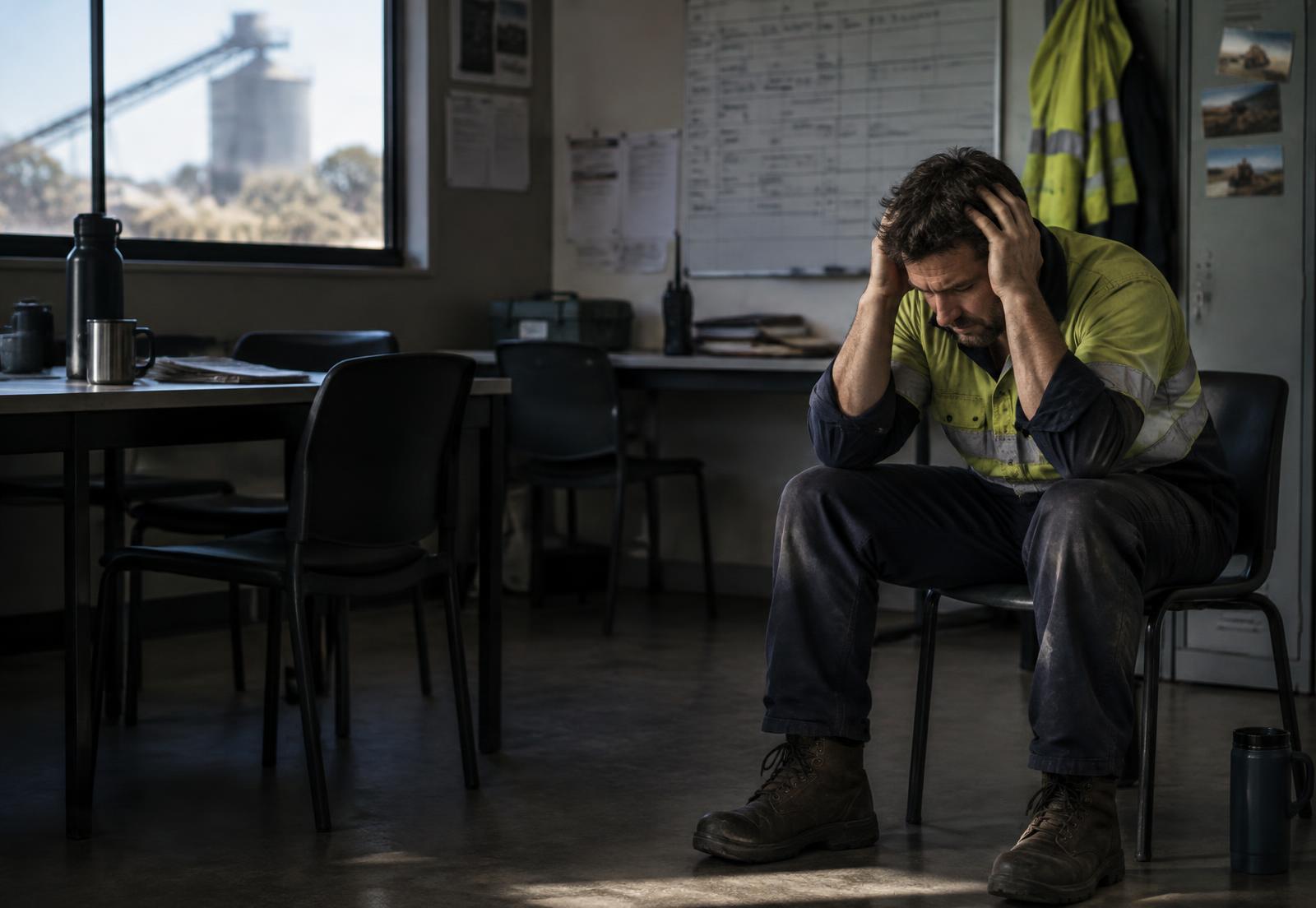
The conditions that affect psychological health are often built into ordinary work.
How much is expected.
How quickly it needs to happen.
How roles are defined.
How work is resourced.
How much control people have.
How change is managed.
How people treat one another.
What happens when somebody raises a concern.
Whether recovery is possible when pressure remains high.
These conditions are not separate from the work.
They are part of how the work is organised, experienced and performed.
That is why psychosocial risk management needs to begin with the work itself.
A note from NewEra
Psychosocial risk has moved rapidly into organisational attention.
That matters.
For too long, psychological health at work was often treated primarily as an individual wellbeing issue. Support was offered after people were struggling, while less attention was given to the conditions contributing to that struggle.
That is changing.
Organisations are increasingly identifying psychosocial hazards, assessing risk, consulting workers and introducing controls.
But there is another challenge.
Psychosocial risk management can become procedural without becoming particularly revealing.
A survey is completed.
Hazards are entered into a register.
Risk ratings are assigned.
Actions are created.
Policies are updated.
Training is delivered.
Support services are promoted.
All of those things may have value.
But they do not automatically tell us what is happening in the work.
Psychosocial risk exists in the relationship between people and the conditions surrounding the work they perform.
Those conditions rarely occur one at a time.
High workload can combine with poor resourcing.
Change can combine with unclear roles.
Emotional demands can combine with weak recovery.
Performance pressure can make speaking up harder.
Low control can become more significant when demands remain high.
A policy may say that people can raise concerns while the social reality makes doing so difficult.
Understanding psychosocial risk therefore requires more than identifying individual hazards.
We need to understand the system of conditions around the work.
The Four Dimensions of Psychosocial Risk — Demands, Design, Dynamics and Defences — provide one practical way to do that.
They ask four questions:
DEMANDS
What does the work require from people?
DESIGN
How is the work set up?
DYNAMICS
What shapes behaviour around the work?
DEFENCES
What protects people when pressure rises?
The 4Ds do not replace recognised psychosocial hazards, regulatory requirements or established risk-management processes.
They provide a way of looking through them.
A way of understanding how conditions develop.
How they interact.
Where exposure exists.
What protection is available.
And what might need to change in the work.
That is the focus of this publication.
Not simply identifying psychosocial hazards.
Understanding how work creates or reduces exposure to them.
Psychosocial risk becomes easier to understand when we stop treating it as something separate from ordinary work.
The work is where demands are experienced.
It is where roles become clear or confused.
It is where resources are sufficient or stretched.
It is where relationships help or hinder.
It is where people decide whether speaking up is safe.
And it is where protection either holds or begins to weaken.
Sections 01–04
Part 01 / See the work01
Psychosocial risk is a work risk
Psychological health is shaped by more than what happens to people. It is shaped by the conditions in which people work.
Organisations have traditionally relied on several signals to understand psychological health.
Engagement.
Absence.
Turnover.
Employee assistance use.
Complaints.
Psychological injury claims.
Survey scores.
Each can tell us something useful.
But most tell us about an experience or outcome after conditions have already existed.
They do not necessarily show the conditions themselves.
Consider two views of the same organisation.
What the organisation sees
Engagement scores.
Absence.
Turnover.
EAP utilisation.
Psychological injury claims.
Survey results.
What the work contains
Sustained workload.
Conflicting priorities.
Low decision latitude.
Role ambiguity.
Emotional demands.
Poor support.
Difficult interpersonal behaviour.
Repeated change.
Insufficient recovery.
Pressure not to raise problems.
Both views matter.
But they tell us different things.
An organisation can have relatively stable outcome measures while important psychosocial exposures are developing within particular teams, roles or work situations.
The absence of a psychological injury claim does not mean the conditions are healthy.
A good engagement score does not mean every workgroup has manageable demands.
Low EAP utilisation does not tell us whether people have adequate control over their work.
Psychosocial risk management therefore needs another line of sight.
Psychosocial hazards do not exist only in surveys. People encounter them while working.
A hazard can be present without every person experiencing the same exposure.
A team can exist within the same organisation and experience very different conditions from another team.
People with the same job title can encounter different demands because of location, shift, supervisor, client group, workload, resources or experience.
A condition can also change over time.
That means identifying a hazard is not the same as understanding exposure.
A useful assessment asks:
Who is exposed?
To what?
When?
How often?
For how long?
At what intensity?
Under what conditions?
What else is happening at the same time?
What protection is available?
FIGURE 3.1From condition to exposure
WORK CONDITION
PERSON ENCOUNTERS THE CONDITION
FREQUENCY / DURATION / INTENSITY
OTHER CONDITIONS INTERACT
PROTECTION AVAILABLE OR ABSENT
POTENTIAL FOR HARM
This shifts the conversation from:
We have identified high workload.
to:
This team experiences sustained workload above available capacity for the final ten days of each monthly cycle, with limited ability to reprioritise work and reduced recovery between peaks.
The second statement gives us something we can work with.
It describes the exposure.
And once exposure is clearer, better control decisions become possible.
Psychosocial risks rarely respect the boxes on a risk assessment.
Work is a system.
Conditions interact.
A high workload may be manageable when people have sufficient resources, clear priorities, control over how work is performed and support when demand increases.
The same workload may become much harder to sustain when staffing is low, priorities conflict and people feel unable to say that capacity has been exceeded.
This is why psychosocial risk cannot always be understood one hazard at a time.
FIGURE 4.1Conditions combine
HIGH WORKLOAD
POOR RESOURCING
CHANGE
UNCLEAR ROLES
EMOTIONAL DEMANDS
WEAK RECOVERY
PERFORMANCE PRESSURE
DIFFICULTY SPEAKING UP
LOW CONTROL
SUSTAINED DEMAND
The interaction matters.
This does not mean two hazards automatically produce harm.
Nor does it mean combinations can be reduced to a simple formula.
It means the conditions surrounding work can alter one another.
That creates an important assessment question:
What happens when these conditions occur together?
Worker experience is essential evidence. It is not the whole exposure picture.
Psychosocial risk is experienced by people.
Their account of the work therefore matters.
If people consistently describe workload as unsustainable, support as poor or roles as unclear, that information should not be dismissed because another dataset looks acceptable.
At the same time, assessment becomes stronger when experience is understood alongside the conditions producing it.
FIGURE 11.1Experience + conditions
WHAT PEOPLE EXPERIENCE
WHAT THE WORK CONTAINS
FREQUENCY / DURATION / INTENSITY
INTERACTIONS
PROTECTION AVAILABLE
BETTER UNDERSTANDING OF RISK
This is not about deciding whether someone’s experience is “objective” or “subjective”.
That distinction is rarely helpful.
The better question is:
What can the different forms of evidence tell us together?
A survey may reveal that people experience low job control.
Conversations may explain where that occurs.
Observation may reveal workflow constraints.
System review may show where decision authority sits.
Operational data may show repeated demand peaks.
Together, those sources give the organisation something it can redesign.
Identifying psychosocial hazards is not the endpoint.
Neither is assigning a risk rating.
The purpose is to reduce the potential for harm.
That means changing the conditions where change is reasonably possible, strengthening protection where exposure cannot be removed, and checking whether those changes actually work.
Sections 13–16
Part 04 / Design better protection13
Control the conditions
The aim is not to make people more tolerant of poorly designed work.
Psychosocial risk controls are sometimes dominated by downstream responses.
Resilience.
Mindfulness.
Wellbeing programs.
Counselling.
Awareness training.
These can have value.
But they should not substitute for changing preventable exposure.
When a condition can be removed or reduced through work design, start there.
Ask:
Can unnecessary demand be removed?
Can workload be redistributed?
Can staffing change?
Can roles become clearer?
Can decision authority improve?
Can workflow be redesigned?
Can competing priorities be resolved?
Can exposure to aggression be reduced?
Can harmful behaviour be addressed?
Can recovery improve?
Can change be better planned?
Can people gain greater influence over how work is performed?
FIGURE 13.1Move upstream
ORGANISATIONAL CONDITIONS
WORK DESIGN
WORK PRACTICES
RESPONSE
INDIVIDUAL SUPPORT
This is not a rigid hierarchy where only one level matters.
Complex risks often require controls at several levels.
The principle is simpler:
Do not stop downstream when the source of exposure can be changed upstream.
Psychosocial risk management is not complete when the assessment is closed.
Work changes.
Risk changes with it.
A new system can change workload.
A restructure can change roles.
A new leader can change team dynamics.
Reduced staffing can change demand.
A new customer contract can increase emotional exposure.
A roster change can affect recovery.
A merger can alter certainty, control and relationships at the same time.
That means psychosocial risk management needs to remain connected to the work.
Monitor the conditions.
Check the controls.
Consult people.
Look for change.
Understand emerging patterns.
Review significant organisational changes.
Learn from both deterioration and improvement.
Ask whether the controls actually changed the condition they were designed to change.
FIGURE 16.1Psychosocial risk operating discipline
UNDERSTAND
ASSESS
DESIGN
ACT
CHECK
LEARN
IMPROVE
CONSULT
ASSURE
Consultation is not one step.
It should occur throughout.
Assurance should provide confidence that important risks are being understood and controls are actually changing the conditions they were designed to influence.