Today's workplace may look completely different next week.
NewEra helps construction and infrastructure organisations understand serious risk, strengthen critical controls and build practical systems that stay connected to the work as projects move.
Build safely in a changing environment.
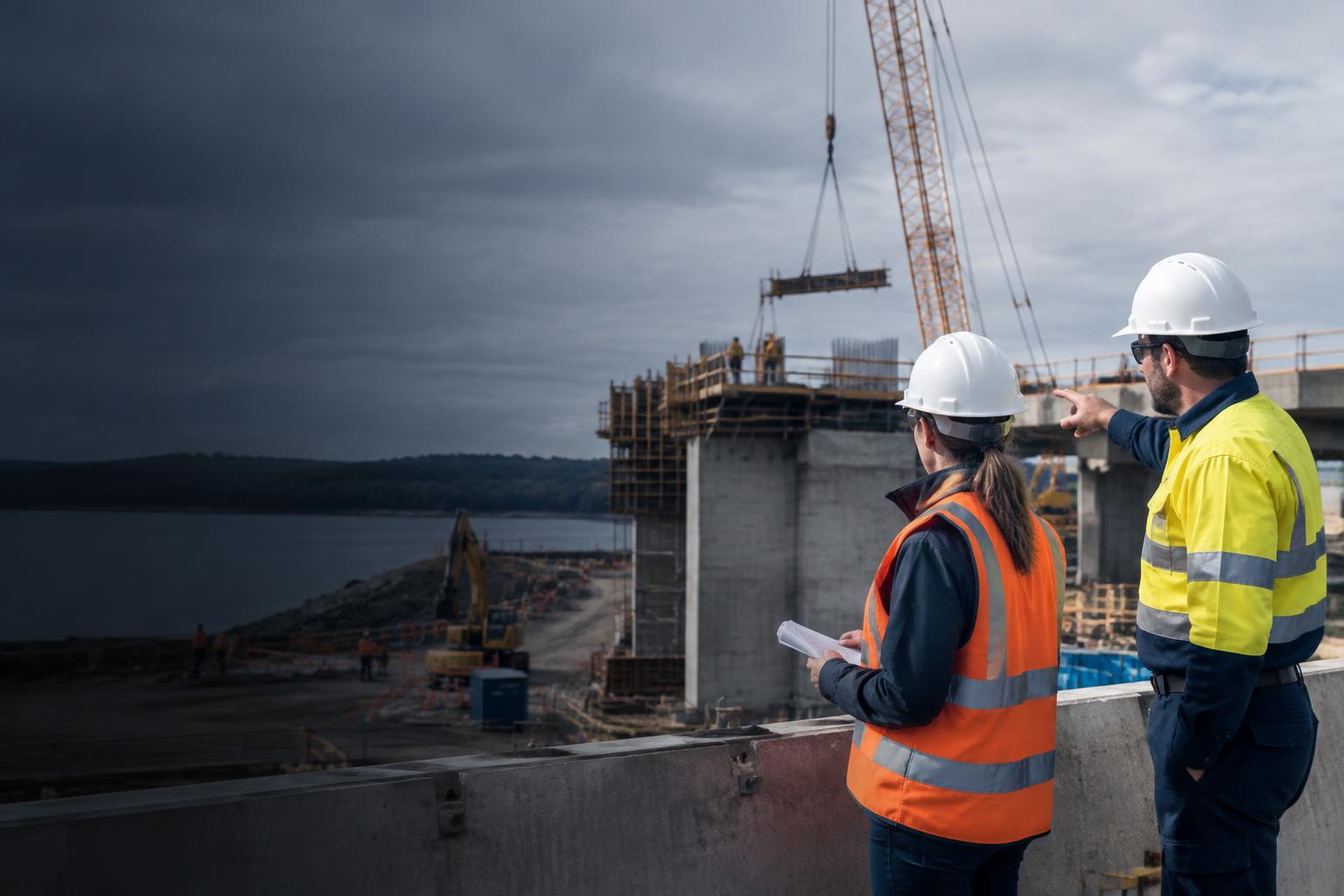
Construction doesn't operate in a finished workplace.
- It creates one.
- Excavations open and close.
- Structures rise.
- Access changes.
- Plant moves.
Temporary works are installed and removed.
- Services become live.
- Contractors mobilise and demobilise.
- Work fronts overlap.
- Weather changes conditions.
- Commissioning introduces new energy.
The risk picture moves with the project.
What worked yesterday may not be enough today.
Start with serious harm.
Construction contains many hazards.
But some events and exposures have the potential to change lives in seconds.
- Falls from height.
- Vehicle and mobile plant interaction.
- Dropped or falling objects.
- Structural collapse.
- Excavation collapse.
- Lifting failures.
- Electrical contact.
- Unexpected energisation.
- Stored-energy release.
- Confined-space events.
- Fire and explosion.
- Loss of containment.
- Public interaction.
The first question is not:
How many hazards have we identified?
It is:
What could seriously hurt or kill someone here?
Follow the pathway.
Once the serious event or exposure is clear, understand how harm could occur.
EVENT OR EXPOSURE
What could happen?
ENERGY
What could cause the harm?
PATHWAY
How could that energy reach a person?
CONTROL
What interrupts the pathway?
PERFORMANCE
What must that control do?
EVIDENCE
How do we know it is effective?
This creates a much stronger basis for managing serious risk than relying on a long list of generic controls.
Critical controls need to work at the workface.
A critical control can look strong in a project risk register.
The real test comes during the work.
- Is the exclusion zone actually maintained?
- Is the edge protection complete?
- Is the lifting configuration within design?
- Is the isolation effective?
- Is the excavation protection appropriate to current conditions?
- Is temporary works installed as designed?
- Are people separated from mobile equipment?
- Has something changed since the work was planned?
Protection on paper doesn't stop the energy.
Define what good looks like.
If a control is important enough to prevent serious harm, people should know what effective means.
NewEra helps organisations define:
- The control.
- Its intended function.
- The performance standard.
- Specific performance requirements.
- Failure modes.
- Dependencies.
- Required evidence.
- Response when requirements aren't met.
That gives supervisors and workers something much more useful than:
“Control in place — Yes / No.”
The better question is:
Is the control capable of doing what we need it to do?
Verification should support a decision.
Construction projects already involve enormous amounts of checking.
- Pre-starts.
- Inspections.
- Permits.
- ITPs.
- Hold points.
- Supervisor checks.
- Safety observations.
- Plant inspections.
- SWMS reviews.
- Audits.
More checking isn't necessarily the answer.
The question is:
What do we need to know?
Then:
What evidence would tell us?
Then:
Who is best placed to verify it?