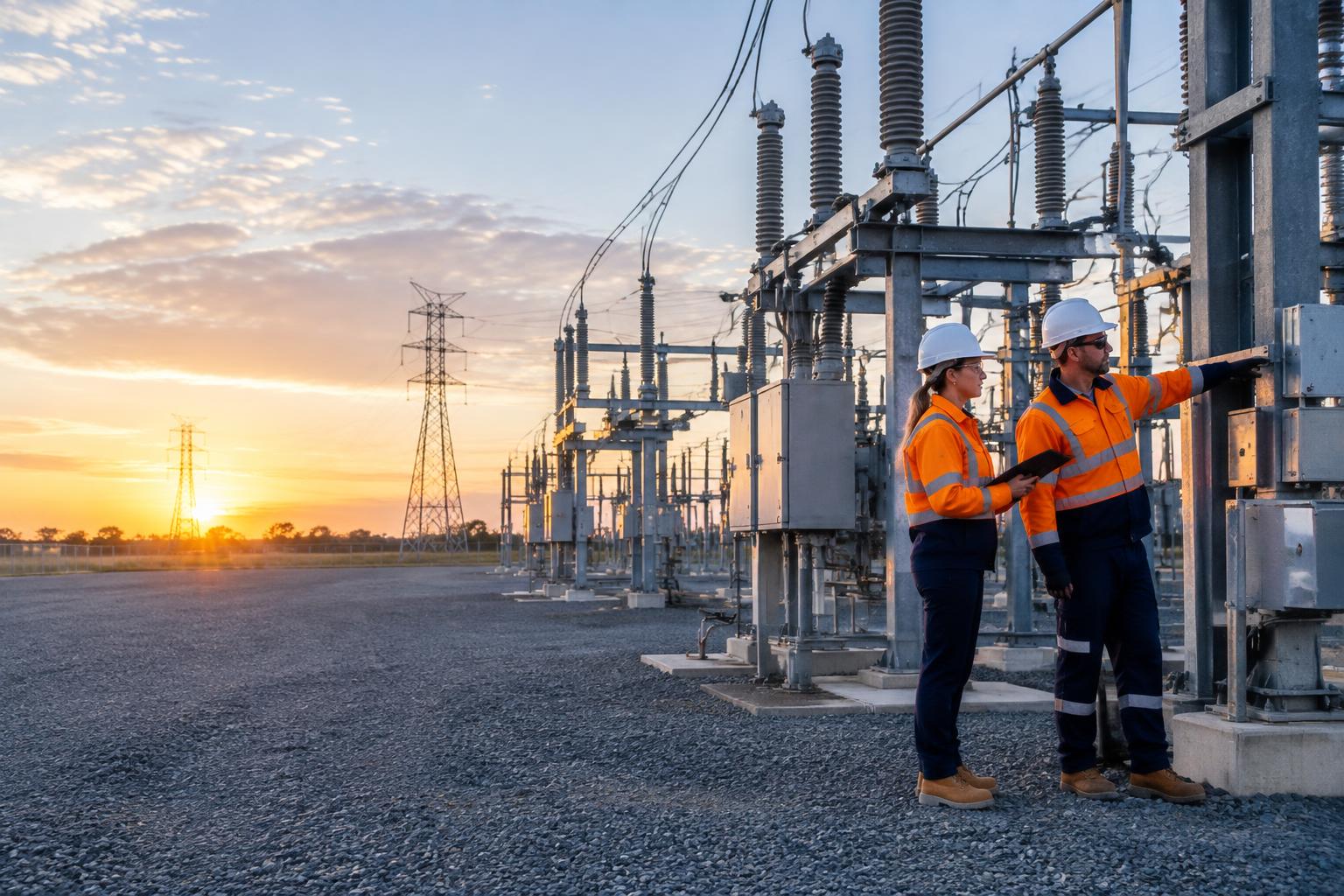
Behind that reliability are people working with high-energy systems, complex infrastructure, dispersed assets and conditions that can change quickly.
NewEra helps energy and utilities organisations understand the work, strengthen critical controls and build systems that protect people while supporting safe, reliable operations.
- Reliability depends on control.
- Electricity.
- Gas.
- Water.
- Renewables.
- Networks.
- Generation.
- Transmission.
- Distribution.
- Field services.
- Different infrastructure creates different risks.
But the underlying challenge is similar.
Complex systems need to remain reliable while people operate, inspect, maintain, repair and modify them.
Where serious harm is possible, organisations need to know more than whether procedures exist.
They need to know:
- What could seriously harm someone?
- Where does exposure occur?
- What controls are we relying upon?
- What must those controls do?
- Are they effective when people need them?
Reliability isn't only an asset question.
It is a control question.
Energy needs somewhere to go.
Many serious incidents begin with the same fundamental problem.
Energy reaches a person when it shouldn't.
- Electrical energy.
- Pressure.
- Mechanical movement.
- Gravity.
- Thermal energy.
- Chemical energy.
- Stored energy.
- Hydraulic or pneumatic energy.
The equipment and work may differ.
The question remains:
What keeps the energy away from the person?
Understanding the energy, the exposure pathway and the barriers between them creates a clearer basis for serious-harm prevention.
Understand the serious-harm pathway.
A critical risk should describe something that can actually happen.
- An electrical contact.
- An uncontrolled release.
- An unexpected energisation.
- A fall.
- A vehicle interaction.
- A lifting failure.
- A loss of containment.
- A confined-space exposure.
- A fire or explosion.
- A structural failure.
Once the pathway is clear, ask:
- What prevents the event?
- What detects changing conditions?
- What prevents escalation?
- What reduces the consequence if prevention fails?
That creates a stronger control architecture than beginning with a generic list of hazards.
Isolation has to work.
Energy isolation is one of the most important control systems across utilities.
But an isolation process is more than a lock.
It can depend on:
- Asset information.
- Identification.
- Switching.
- Planning.
- Competence.
- Communication.
- Control-room interfaces.
- Isolation points.
- Lockout.
- Tagging.
- Testing.
- Verification.
- Stored-energy management.
- Handover.
- Reinstatement.
A weakness anywhere in that chain can change the protection available to the person doing the work.
Don't just verify the lock. Understand the isolation.
Critical controls need a defined purpose.
A critical control should have a clear role in preventing or mitigating a serious-harm pathway.
NewEra helps organisations define:
- The event or exposure.
- The energy source.
- The barrier function.
- The control.
- Its performance standard.
- Its performance requirements.
- Its failure modes.
- Its dependencies.
- The evidence required to determine effectiveness.
The objective isn't to create more controls.
It is to understand the controls you cannot afford to lose.
Verification should support a decision.
A verification question is only useful if the answer tells someone something meaningful about control effectiveness.
Start with:
What must the control do?
Then:
What needs to be true for it to do that?