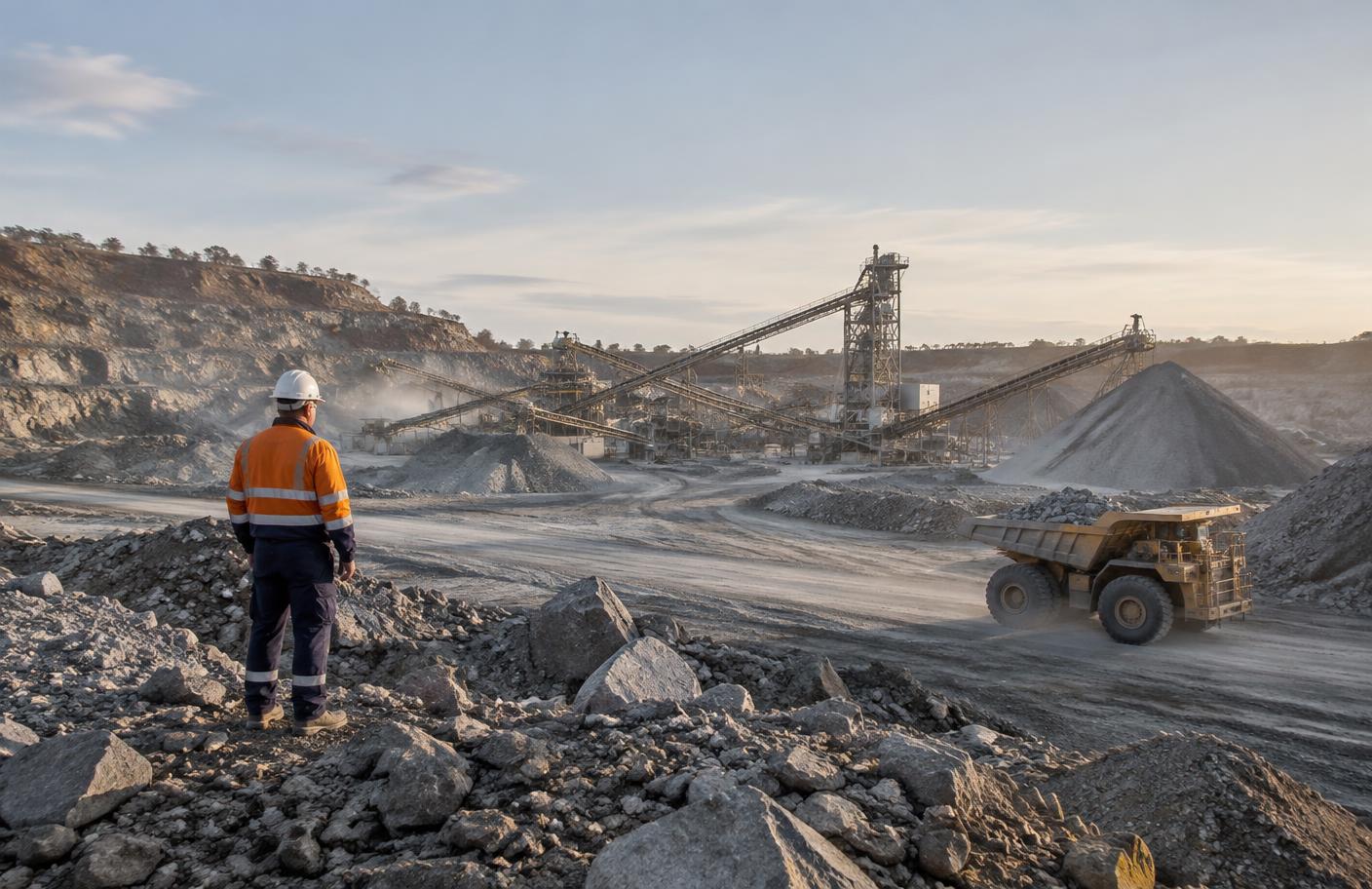
Managing that environment takes more than procedures and risk registers.
NewEra works with mining and resources organisations to understand how work really happens, strengthen the controls that prevent serious harm and build systems that perform where they matter most.
Where the consequences are serious, the controls need to work.
Mining has spent decades developing sophisticated safety systems.
- Standards.
- Procedures.
- Risk assessments.
- Permits.
- Training.
- Technology.
- Audits.
- Critical controls.
Yet serious incidents can still occur when the protection expected by the system isn't the protection available in the work.
That is where NewEra focuses.
- What could seriously harm someone?
- What controls are we relying on?
- What must those controls do?
- Are they effective where the exposure exists?
- How do we know?
Serious risk needs operational evidence.
Understand the exposure.
A critical risk isn't simply a category on a bowtie or risk register.
It becomes real when people, energy and operating conditions create the potential for serious harm.
Mining and resources operations can involve exposure to:
- Mobile equipment.
- Uncontrolled movement.
- Stored energy.
- Electricity.
- Pressure.
- Working at height.
- Ground instability.
- Lifting operations.
- Explosives.
- Fire and explosion.
- Hazardous substances.
- Confined spaces.
- Inundation.
- Entanglement.
- Vehicle interaction.
- Process hazards.
Depending on the operation, the pathways differ.
The principle doesn't.
Understand the serious-harm pathway before deciding what protection matters most.
Critical controls need to earn the name.
Not every control is critical.
A critical control should have a clear role in preventing or mitigating a defined serious-harm pathway.
NewEra helps organisations move from long control lists toward a defensible understanding of:
- The event or exposure.
- The pathway to harm.
- The required barrier function.
- The controls relied upon.
- Their performance requirements.
- Their dependencies.
- Their failure modes.
- The evidence needed to determine effectiveness.
- Fewer controls.
- Clearer purpose.
- Better verification.
Verification needs to tell you something useful.
A completed verification isn't the objective.
A reliable decision about control effectiveness is.
Weak verification asks:
Was the control checked?
Better verification asks:
What evidence would demonstrate that this control can perform its required function here, now?
That means connecting:
PERFORMANCE STANDARD
What must the control achieve?
PERFORMANCE REQUIREMENT
What needs to be true?
EVIDENCE
What would demonstrate it?
VERIFICATION
How will we test it?
DECISION
Can we rely on the control?
- Design the evidence first.
- Write the question second.
- Verify at the right level.
Critical controls exist within a wider system.
NewEra can help organisations examine them through complementary perspectives.
SYSTEM
Has the organisation created the conditions required for the control to succeed?
WORK
Can the control be implemented under the conditions of the task?
CONTROL
Is the protection effective at the point of exposure?
These perspectives connect corporate expectations with operational reality.
From system design to the workface.
Know the state of protection.
A control isn't always simply working or failed.
It may be:
EFFECTIVE
Performing as required.
DEGRADED
Protection remains, but capability or reliability has reduced.