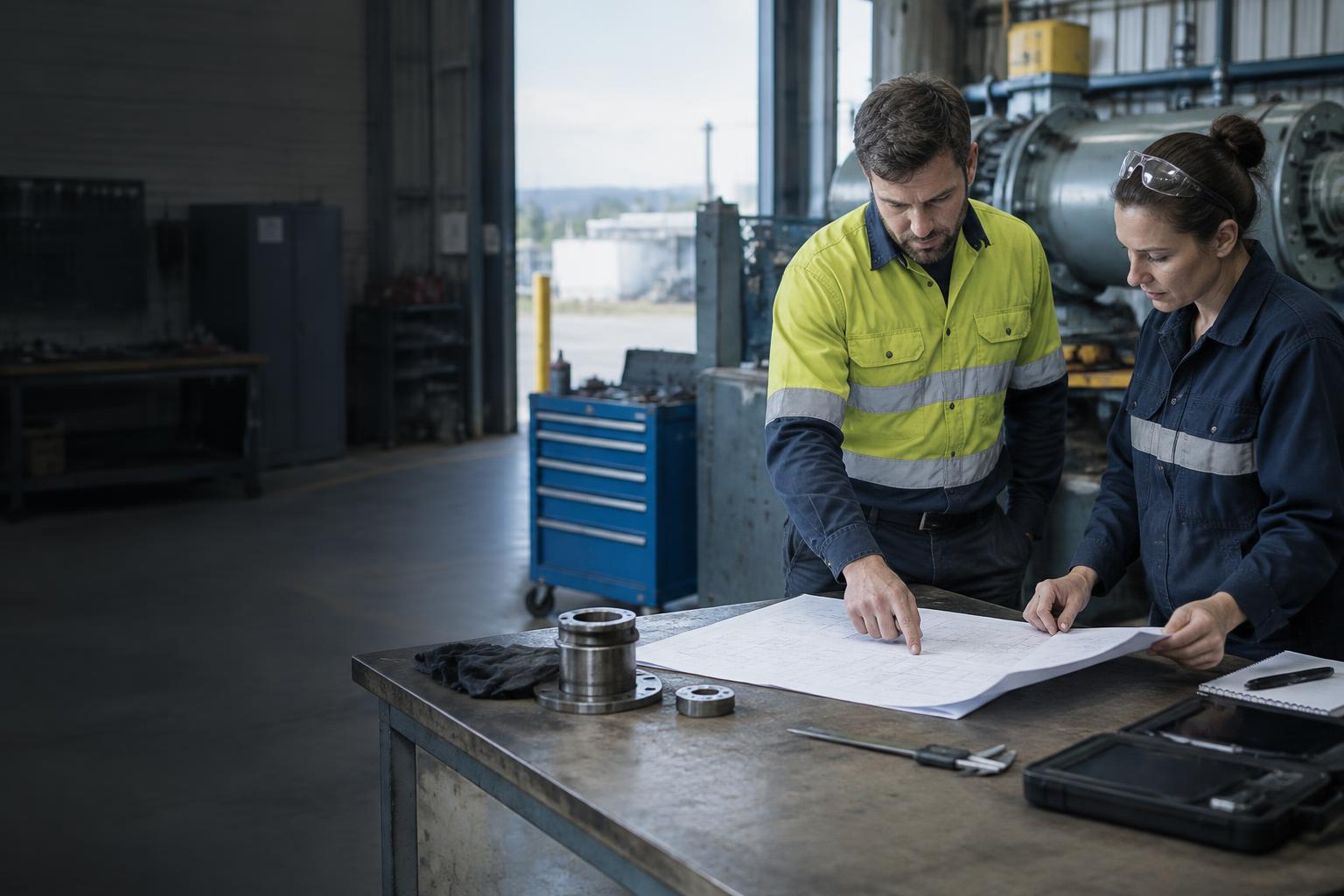
Reliable production depends on those interactions working as intended — including when equipment fails, processes change or people need to intervene.
NewEra helps manufacturers understand serious risk, strengthen critical controls and design safer systems around the work people actually do.
- Repetition doesn't make risk routine.
- The same task.
- The same machine.
- The same production line.
- The same process.
- Day after day.
- Familiarity can create confidence.
But serious harm often occurs when something interrupts normal production.
- A blockage.
- A jam.
- A breakdown.
- A quality problem.
- A cleaning task.
- An adjustment.
- A changeover.
- A maintenance intervention.
- A guard removed.
- A process upset.
The important question isn't only:
How does this equipment operate normally?
It is:
What happens when normal stops being normal?
Understand the serious-harm pathways.
Manufacturing environments can contain significant energy.
- Mechanical.
- Electrical.
- Pressure.
- Thermal.
- Chemical.
- Gravity.
- Motion.
- Stored energy.
Depending on the operation, serious-harm pathways may include:
- Entanglement.
- Crushing.
- Entrapment.
- Unexpected movement.
- Unexpected energisation.
- Vehicle and pedestrian interaction.
- Falls.
- Dropped objects.
- Pressure release.
- Chemical exposure.
- Fire and explosion.
- Burns.
- Loss of containment.
- Confined-space exposure.
- Lifting failures.
- The equipment differs.
The principle remains:
Understand how the energy could reach the person.
Start with the pathway.
Then identify the protection.
A machine may have many safety features.
A process may have many controls.
That doesn't mean every one is critical.
NewEra helps manufacturers establish a clearer line of sight.
EVENT OR EXPOSURE
What could seriously harm someone?
ENERGY
What creates the potential for harm?
PATHWAY
How could the person become exposed?
BARRIER
What function needs to interrupt that pathway?
CONTROL
What provides that function?
PERFORMANCE
What must the control do?
EVIDENCE
How do we know it works?
This shifts attention from lists of controls to the architecture of protection.
Guarding needs to do more than exist.
Machine guarding can look straightforward.
But effective protection can depend on:
- Guard design.
- Distance.
- Openings.
- Fixings.
- Interlocks.
- Defeat resistance.
- Maintenance.
- Inspection.
- Access requirements.
- Production interaction.
- Human behaviour.
The useful question isn't:
Does the machine have a guard?
It is:
Can someone reach the hazardous energy while it is capable of harming them?
Isolation matters most when people enter the danger.
Production equipment is often safest while it is operating as designed.
Exposure can increase when somebody needs to intervene.
- Maintenance.
- Cleaning.
- Unblocking.