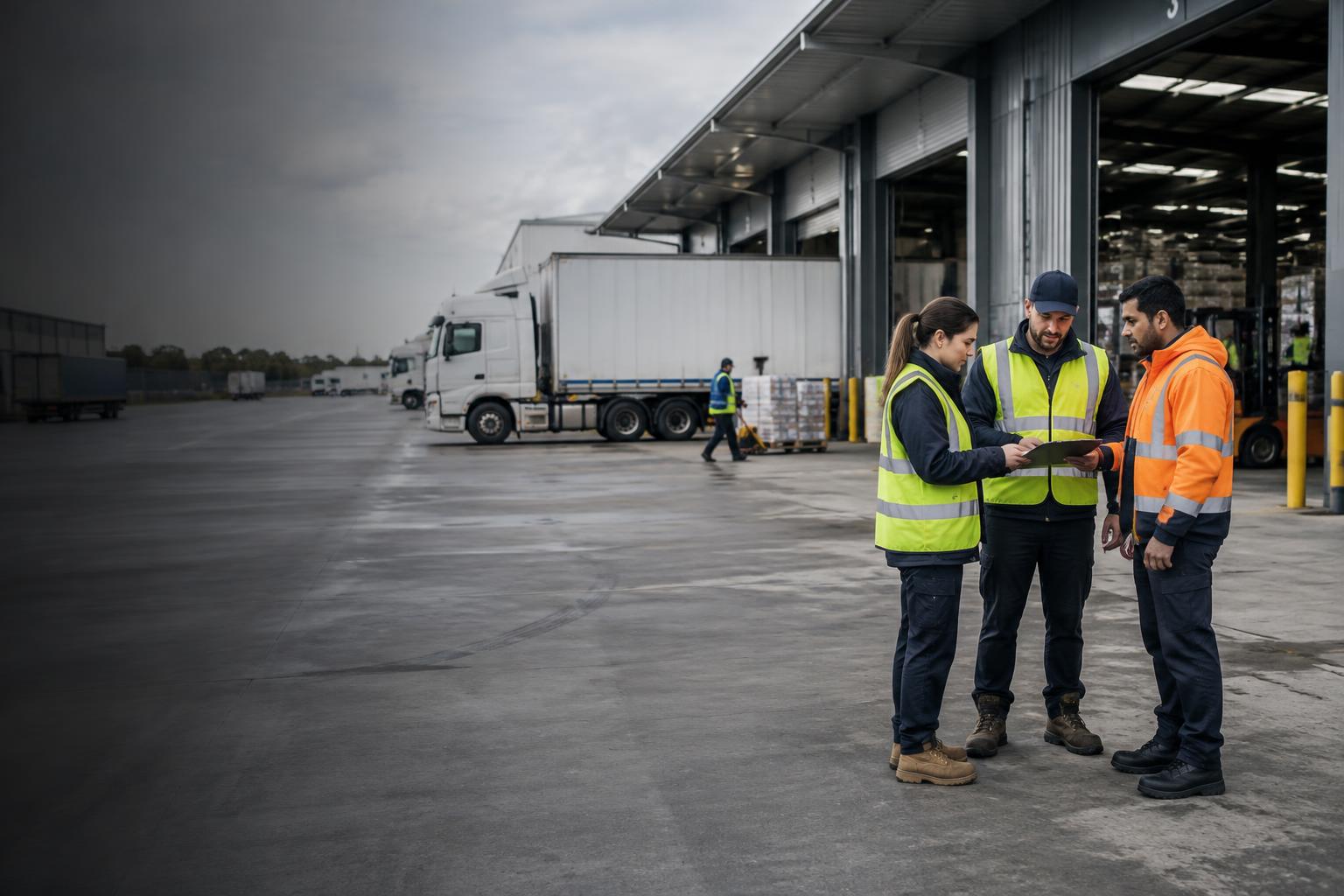
Road conditions change. Schedules move. Customers create constraints. Vehicles interact with people. Loads change. Fatigue accumulates.
NewEra helps transport and logistics organisations understand serious risk, strengthen critical controls and design safer systems around how work actually moves.
Every journey changes the operating environment.
A manufacturing process can be engineered within a controlled facility.
Transport leaves the gate.
The operating environment can include:
- Public roads.
- Other drivers.
- Pedestrians.
- Weather.
- Traffic.
- Remote locations.
- Customer sites.
- Loading facilities.
- Roadworks.
- Changing surfaces.
- Unfamiliar environments.
- Time pressure.
- The organisation can't control everything.
It can control how well people and systems are prepared for what they encounter.
You can't control the road.
You can strengthen the system around the journey.
Start with serious harm.
Transport organisations manage hundreds of hazards.
The more important question is:
What events and exposures could seriously injure or kill someone?
- Vehicle collision.
- Vehicle rollover.
- Pedestrian interaction.
- Mobile equipment interaction.
- Uncontrolled vehicle movement.
- Falling or shifting loads.
- Loading and unloading events.
- Working at height.
- Coupling and uncoupling.
- Stored-energy release.
- Fatigue-related events.
- Maintenance exposure.
Depending on the operation, the pathways differ.
The principle remains:
Understand how serious harm can occur before deciding what protection matters most.
Movement is energy.
A heavy vehicle doesn't need to be travelling quickly to contain significant energy.
- Mass.
- Speed.
- Direction.
- Gradient.
- Surface.
- Load.
- Visibility.
- Distance.
These conditions influence what happens when a vehicle and a person, object or another vehicle occupy the same pathway.
That creates a simple question:
What keeps moving energy away from people?
Separate before you administrate.
Where vehicles and people interact, the strongest solution is often to prevent the interaction.
- Physical separation.
- Dedicated pedestrian routes.
- Barriers.
- Traffic flow design.
- Controlled crossings.
- Exclusion zones.
- Loading zones.
- One-way systems.
- Remote operation.
- Automation.
Only then should organisations rely on weaker layers such as:
- Rules.
- Signs.
- Procedures.
- Communication.
- High-visibility clothing.
- People paying attention.
Design out the interaction where you can.
Critical controls need a purpose.
A transport operation may have hundreds of controls.
Not all are critical.
A critical control should have a clear role in preventing or mitigating a defined serious-harm pathway.
NewEra helps organisations establish:
- The event or exposure.
- The energy involved.
- The pathway to harm.
- The required barrier function.
- The critical control.
- Its performance standard.
- Its performance requirements.
- Its dependencies.
- Its failure modes.
- The evidence needed to determine effectiveness.
Know which controls you cannot afford to lose.
Verification should answer a real question.
A completed vehicle check doesn't automatically mean a vehicle is safe.
A fatigue declaration doesn't automatically mean fatigue is controlled.
A journey plan doesn't automatically mean the journey remains suitable.
A loading checklist doesn't automatically mean the load is secure.
Verification should start with:
What decision needs to be made?